

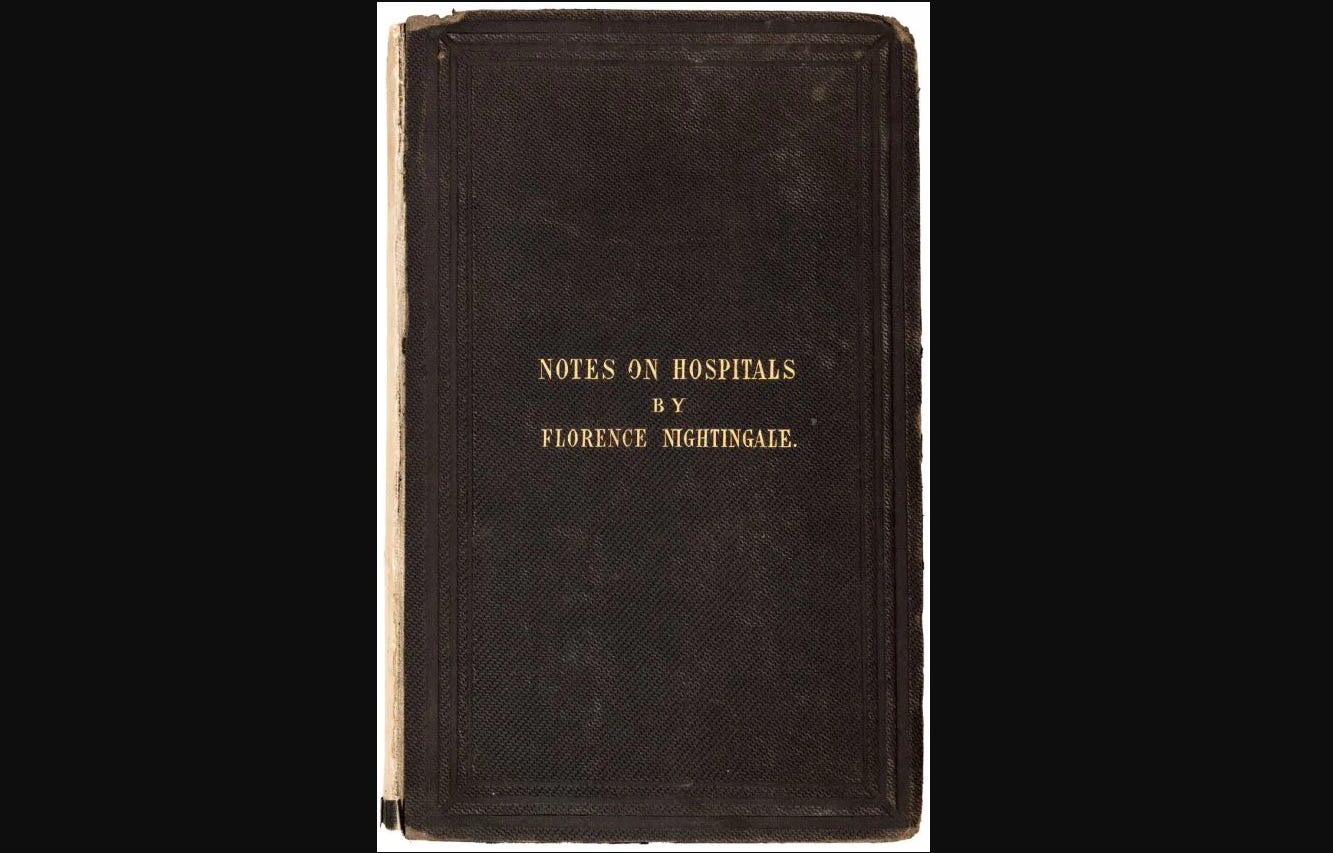
Notes on Hospitals is public domain and can be found for free on the Internet Archive.
In a recent profile of economist Emily Oster, we compared her sloppy COVID-19 “data-driven” minimizing to the legendary nurse Florence Nightingale and her 1859 book Notes on Hospitals. I figured it was worth taking a deeper look at through the context of the COVID-19 pandemic. Notes on Hospitals is essentially a 19th century technical manual on the design, construction, and administration of hospitals. Nightingale’s premise that the hospitals of the time were failing in their mission of the treatment and care of patients, and she supports this hypothesis with a mountain of actual data, as well as a series of proposals to dramatically improve patient outcomes instead of simply shrugging her shoulders and denying the problem.

In Nightingale’s time as a nurse in the 1800s, hospitals were often overcrowded, poorly ventilated, and rather unhygienic. These could be gloomy, depressing places where your chances of survival as a patient was fraught with risk. Transmission of diseases between patients and healthcare workers was rampant, with doctors and nurses taking a rather apathetic attitude for what often contributed to poor outcomes, including death. Attitudes of the general public towards doctors & hospitals at the time were…not great, Florence writes:
“There is a growing conviction that in all hospitals, even in those which are best conducted, there is a great and unnecessary waste of life; and that, as a general rule, the poor would recover better in their own miserable dwellings if they had proper medical and surgical aid, and efficient nursing, than they do under more refined treatment in hospitals.”
Let us compare this to the state of American public schools prior to 2020: Teachers nationwide struggled with their goal of educating students in overcrowded and poorly ventilated classrooms. Often, they must dedicate time and resources to provide for the essential needs of students in a nation where child poverty is rampant. These were not pleasant places; pediatric suicide rates actually decreased when remote schooling was implemented in 2020, much to the chagrin of cranks like Jay Bhattacharya & those making up the “Urgency of Normal,” who pretended that repeatedly infecting children with COVID-19 was the best thing for their mental health. Medical research has proven otherwise. This collective apathy over both the state of European hospitals in the 1800s, and the American schools of today to fulfill their essential functions, is quite woeful and indefensible.
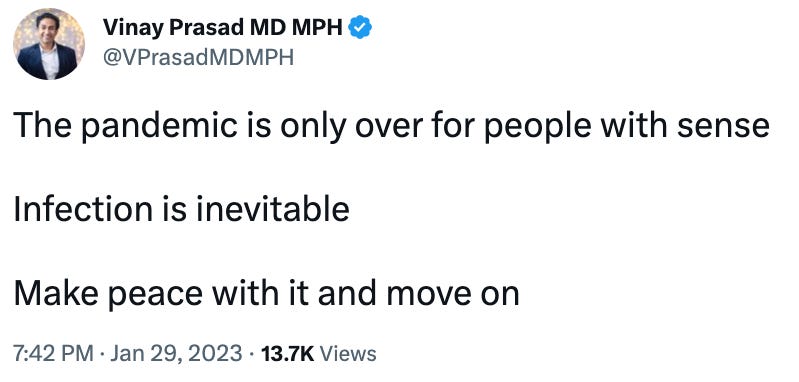
Nightingale’s writing is incredibly firm: the collective apathy around hospital-acquired (nosocomial) infections is completely unacceptable. The justifications for irresponsibility will sound hauntingly familiar to some of you: that infection is merely “inevitable.” Florence is having none of this:
“It may seem a strange principle to enunciate as the very first requirement in a Hospital that it should do the sick no harm.”
Over 150 years later, with all the rapid advances in science and medicine we’ve made, surely, we would be all the more prepared to mitigate an airborne pandemic such as COVID-19, right? Surely, there could be no controversy about the importance of infection control measures in healthcare settings, yes? Alas, the media often platformed doctors such as Tufts’ “Chief Infection Control Officer,” Shira Doron, who spent years rallying against mask mandates in hospitals, claiming that “seeing smiles” was more important than preventing patients from getting sicker, developing chronic illness, or even dying as a result of contracting COVID-19 in the hospital. Research from Australia found that hospital-acquired COVID-19 had a much higher fatality rate than in the general population.
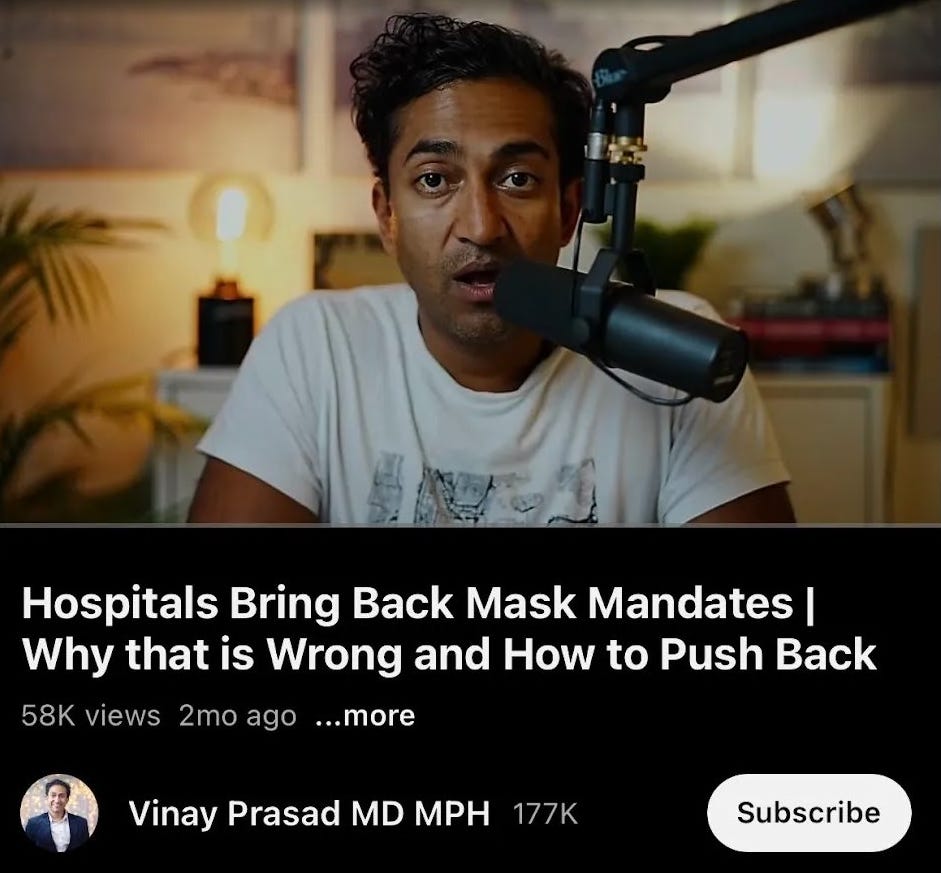
Before joining the Food & Drug Administration, University of California San Francisco’s Vinay Prasad even went so far as to tell his rabid, anti-vaccine fans to “resist” mask mandates on his YouTube channel, in a deeply embarrassing and pathetic display of indignant ignorance:
One might be led to think that some form of collective amnesia seemed to sweep over much of the medical profession in 2020, as Florence Nightingale clearly refutes this over a century and a half prior:
“To this query many years’ experience of hospitals in various countries and climates enables to answer explicitly as the result of my own observation, that, even admitting to the full extent the great value of the hospital improvements of recent years, a vast deal of the suffering, and some at least of the mortality, in these establishments is avoidable.”
This is all quite disturbing, to see certain individuals who wish to enjoy the wealth and societal prestige shy away from the professional responsibility that comes with their role. This isn’t simply about mask mandates in hospitals, either. A large part of Notes on Hospitals is centered around the need of improved ventilation, as Florence writes extensively. Here the aggressive apathy of frauds like Prasad & Doron laid bare:
“…there is no such thing as inevitable infection. Infection acts through the air. Poison the air breathed by individuals, and there is infection. Shut up 150 healthy people in a Black-hole of Calcutta, and in twenty-four hours an infection is produced so intense that it will, in that time, have destroyed nearly the whole of the inmates. Sick people are more susceptible than healthy people; and if they be shut up without sufficient space and sufficient fresh air, there will be produced […] the usual tribe of hospital-generated epidemic diseases.”
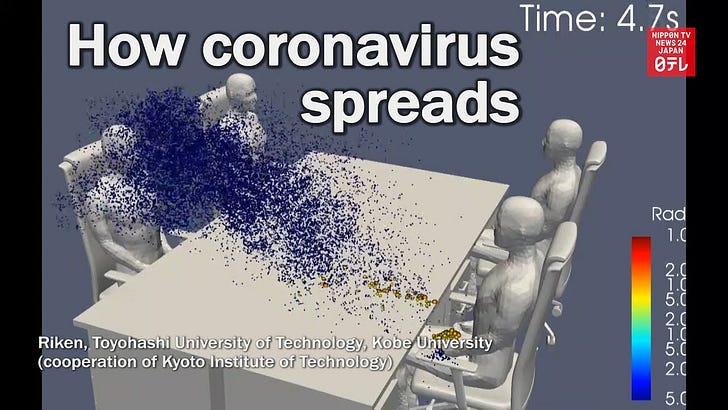
Obviously, our collective understanding of medicine has advanced a great deal since the 1850s. On top of this, we have great advances in the ventilation and filtration of our air, thanks to engineering science. You can read the science for yourself:
Before joining the Biden Administration, the Brown University Dean of Public Health Ashish Jha advised his childrens’ private school on measures to prevent COVID-19 outbreaks. Upon joining the Biden Administration as COVID Czar, Jha abandoned sharing this guidance with America’s public schools in deference to Biden & Zients’ failed pandemic response of indifference to preventable suffering.

He would later collect an award from ASHRAE upon the development of a new indoor air quality standard, of which no attempt was made to implement in schools. While certain grifters like Emily Oster will insist that the implementation of non-pharmaceutical interventions is responsible for “learning loss,” it’s clear now in 2026 that the normalization of unmitigated diseases outbreaks as “inevitable” has had a serious negative impact on the American education system.
The principles of Florence’s Notes on Hospitals can be readily adapted to other essential institutions like public schools and improved upon, as Nightingale writes:
“If infection exists, it is preventable. If it exists, it is the result of carelessness, or of ignorance.”
For what is a supposed “post-pandemic” era, we see a constant stream of schools shutting down due to outbreaks of illness alongside a steady rise in chronic absenteeism. It’s quite simple, really - if we as adults carelessly choose to fail to provide a safe and healthy environment for children to learn, then just why should they dedicate themselves to their studies? We are choosing to imprint upon them the values of apathy and ignorance. Nightingale expands upon this further when dismantling the apathy around “inevitable” infections, in which she exposes the willfully incurious of today:
“Have those who put forward this doctrine of ‘inevitable infection’ among washerwomen ever examined the process of washing, the appliances by which it is done, and the place where the women wash? If they will do so, they will very generally find a small, dark, wet, unventilated, and overcrowded little room or shed, in which there is hardly space to turn about - so full of steam loaded with organic matter that it is hardly possible to see across the room. Is it surprising that the linen is badly washed, that it is imperfectly dried, and that the washerwomen are poisoned by inhaling organic matter and foul air?”
Let us compare this to the countless attacks on all manner of engineering tools to prevent the transmission of SARS-CoV-2, from N95 respirators to Corsi-Rosenthal boxes to HEPA filtration to farUVC lighting:
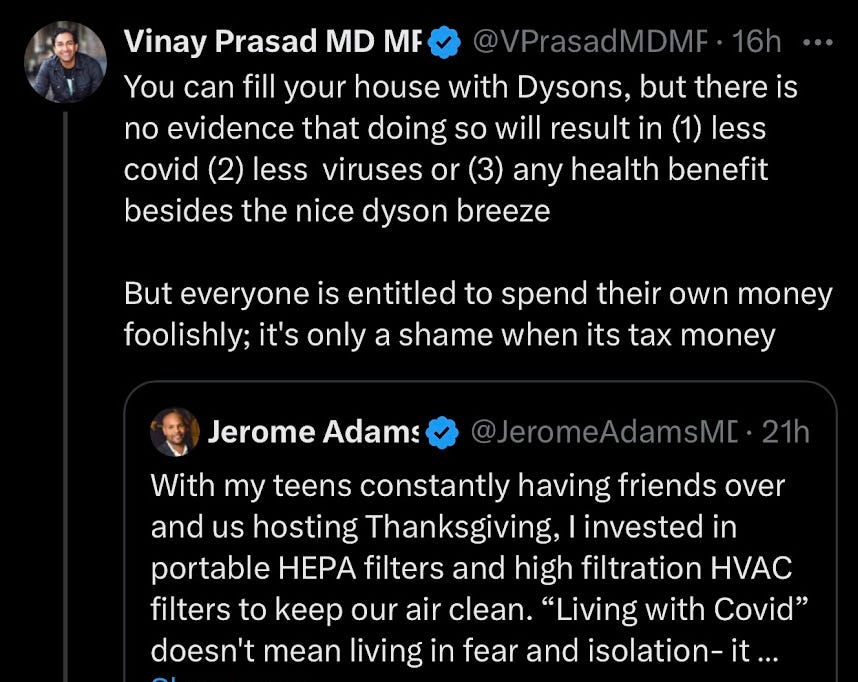
A total lack of curiosity as to the basic mechanics and principles as to how such technology works, willfully refusing to grow one’s knowledge and understanding, all so that one may make smug and snarky remarks. Over a century and a half apart, and the same challenges Nightingale faced in Europe are happening today with COVID-19. Florence has little patience for it, and neither should you:
“Ignorance and mismanagement lie at the root of all such presumed cases of infection. And it would better serve the cause of humanity if, instead of citing such facts - if they be facts - as illustrations that such and such a disease if infectious, people would reform these washing establishments and convert them into proper laundries, from which properly cleansed and prepared linen could be supplied to the sick, and in which the health of the servants could be preserved from injury.”
Had social media existed in 19th Century Europe, there would be no shortage of tweets, vlogs, and other such garbage assailing Nightingale’s position. She would be harassed and threatened by the fans of her professional colleagues in an attempt to hound her into silence. Economists such as Jay Bhattacharya or Emily Oster would try to denigrate her proposals as ineffective and overly costly with junk “data.” Conservatives would demonize and vilify Florence as some sort of perverse villain.
The beauty of human history and the written word as a portal to the past is that it liberates us from having to repeat the same mistakes, but we must actively make a commitment to do so. How shameful that many credentialed academics at multiple universities, of which young students pay a great deal of tuition to learn from, have been so dutifully exposed by a book written well over a century and a half ago. So much needless suffering and death could have been prevented, and can be prevented now, if we unite under the principle Nightingale established: “Ignorance and mismanagement lie at the root of all such presumed cases of infection.”
Closing Thoughts
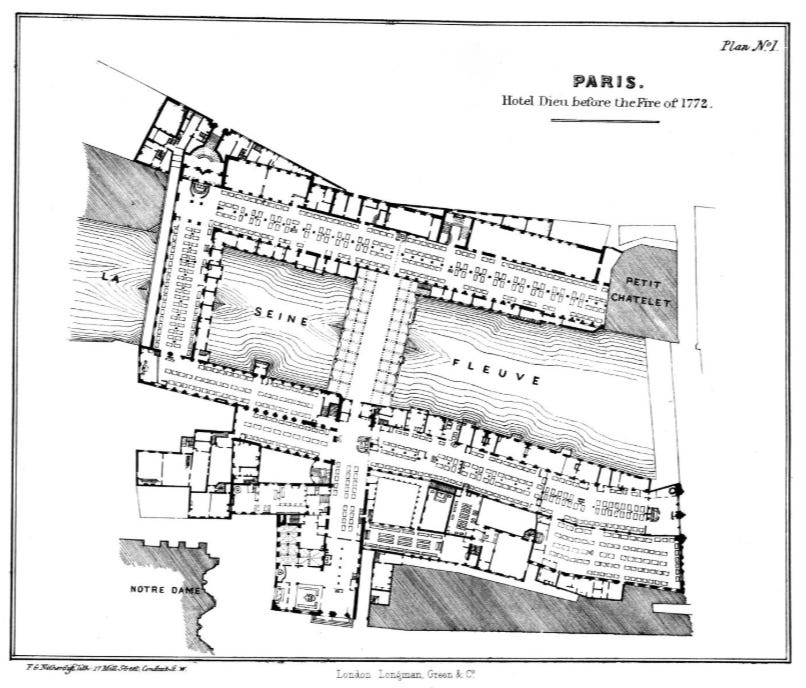
As Levar Burton always said on Reading Rainbow, don’t take my word for it. Even if you’re not interested in pouring over architectural diagrams and detail medical statistics from the 1800s, it’s worth skimming over the mountain of evidence contained within Notes on Hospitals that supports Nightingale’s thesis. Compare her mastery of the subject matter to many of the credentialed academics who have done their best to sabotage the COVID-19 response, and the sloppy work they have produced and misrepresented in order to bamboozle the public.
If a doctor today is repeating the same unscientific myths that were debunked well over a century ago, it should be a stain upon their credibility. Now in modern America, it gets you jobs in the federal government. We have a great deal of work to do as a nation if we are to ever right this ship, and it starts with a revival of the principals Nightingale established over a century and a half ago.
Notes on Hospitals is public domain and can be found for free on the Internet Archive.
